
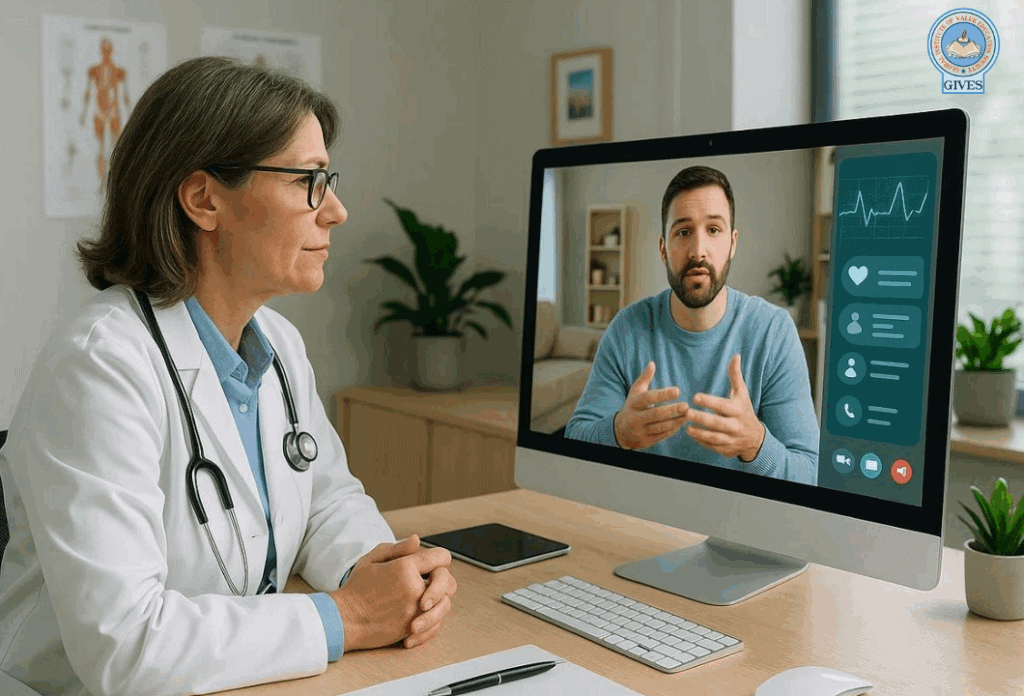
Telemedicine is growing faster than anyone expected. Every day, more doctors are doing video calls, giving advice on WhatsApp, sending prescriptions online, and helping patients who live far away. It feels easy, quick, and helpful. But there is one thing many doctors do not realize that telemedicine also brings legal responsibilities.
This is why every doctor must know the legal rules, documentation needs, and online consultation guidelines. Telemedicine is a beautiful tool, but without medico-legal awareness, it can also become a risk.
At GIVES (Global Institute of Value Education Society), we teach doctors how to stay safe, confident, and legally protected while practicing online.
Example: A Simple Story to Understand the Problem
Imagine Dr. Mehta.
He is a kind doctor, very good at his work. One evening, he receives a message on WhatsApp:
“Doctor, my son has fever. Can you please tell me what to do?”
Dr. Mehta replies quickly, writes a prescription on the phone, and sends it. He does not take proper history. He does not ask for consent. He does not record the consultation anywhere.
Later, the patient develops complications.
The family says, “Doctor gave wrong advice online!”
Now Dr. Mehta is scared. He has no proof of what he wrote. No history. No documentation. No consent.
This is how one simple online chat can become a medico-legal case.
Today, this is happening to many doctors simply because they don’t know the telemedicine laws.
Why Telemedicine Needs Legal Awareness
1. Online Consultations Have Clear Rules
The Government of India has given official Telemedicine Practice Guidelines. These rules say:
- What doctors can do online
- What they cannot do
- How to write prescriptions
- What medicines are allowed
- What type of patient questions need in-person visit
Many doctors still do not know these rules — and that is risky.
2. Documentation Still Matters
Just because the consultation is online does NOT mean documentation can be ignored.
Doctors must keep:
- Chat records
- Video screenshots (if needed)
- Prescription copies
- Written consent
- Patient history notes
This documentation becomes your legal protection shield.
3. Wrong Advice Can Become a Legal Case
When you treat a patient online, you are still responsible for:
- Accuracy
- Safety
- Proper guidance
- Follow-up
If something goes wrong and documentation is poor, doctors can face serious medico-legal trouble.
4. Patients Are More Aware Now
People search online, read forums, and know their rights. A small mistake in teleconsultation can easily turn into:
- Complaints
- Consumer court cases
- Online defamation
- Stressful legal battles
How GIVES Helps Doctors Stay Safe in Telemedicine
At GIVES, we understand that doctors are busy and handling legal issues alone is stressful. That is why our medico-legal courses, created by Adv. Dr. Arun Mishra, help doctors learn:
- Telemedicine guidelines
- Legal limits of online advice
- Proper consent procedures
- Safe documentation methods
- What to do during a complaint
- How to practice online without fear
Our programs are simple, practical, and focused on real cases. Doctors feel more confident after learning how to protect themselves in digital consultations.
Simple Tips to Stay Legally Safe Online
Here are easy steps doctors can follow:
1. Always Ask for Consent
Even a simple line like, “Do you agree to continue this consultation online?”
This protects you.
2. Take Basic History
Do not rush. Always ask:
- Age
- Symptoms
- Medical background
- Allergies
3. Prescribe Carefully
Some medicines cannot be given online. Know the rules.
4. Keep Records
Save chats, emails, or screenshots in a folder.
5. Know When to Say “Please Visit Clinic”
If the case seems complicated, shift to offline care.
FAQs
1. Is telemedicine legally allowed in India?
Yes. Telemedicine is officially allowed, but doctors must follow the Telemedicine Practice Guidelines. GIVES teaches all these rules in simple steps.
2. Do I need consent for online consultation?
Yes. Consent is important to protect both doctor and patient. Even simple written consent on chat is acceptable.
3. Can I prescribe all medicines online?
No. There are restrictions. Some medicines cannot be prescribed online. Doctors must know which medicines are allowed.
4. Why is documentation important in telemedicine?
Documentation is your legal proof. It protects you if a complaint or misunderstanding occurs.
5. How can GIVES help me stay legally safe?
GIVES offers medico-legal training that teaches doctors how to consult online safely, handle documentation, and avoid legal trouble.
Conclusion
Telemedicine is the future. It saves time, money, and effort for both doctors and patients. But to enjoy the benefits safely, doctors must understand the legal side of teleconsultation.
With the right medico-legal awareness, you can treat more people, grow your practice, and stay fully protected. At GIVES, we help you become confident, safe, and legally aware so you can heal people without fear.